Showing posts with label Polyxena. Show all posts

Thursday, January 9, 2014

#anz23mthings Thing 13 Online identity


Polyxena
Polyxena

Online identity is something that it is worthwhile pondering over every now and again. I have had an online identity since the mid 1990s when I started getting involved in listservs.  In fact I am still actively involved in two such groups. These identities relate to archaeology and breast cancer. Every now and again I Google myself and am fascinated by the stuff that comes up ranging from my library publications and activities to membership of things such as LinkedIn and to a MySpace account I had once but haven't looked at in years.

One of the useful reminders I found in reading about this Thing was the fact that we often use Twitter, Facebook and Google signins to get to other sites.  I find it useful to review what sites have access via these accounts and to revoke that access if I feel it appropriate. Sometimes there is nothing I want to revoke but other times there is. 

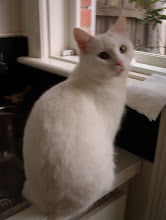
Whilst in theory I knew this, I was taken by the description of the spectrum of identity: anonymous, pseudonymous, self-asserted, socially validated, officially verified. Yes, I do have all of those and a number of pseudonyms dating back for years.  One thing I have noticed recently is that a lot of sites/apps which had previously been pseudonymous now allow real names as well so I doubt that many people I know wouldn't realize who Polyxena really is and that she isn't a white cat. In fact, I have blogged about my use of that name here and appeared at quite a few library events with that Twitter moniker on my name tag.

Hecuba the Beautiful
Hecuba

I know some people strictly divide their professional and personal identities.  I have always chosen not to do that. I am a librarian, I have breast cancer, I am a breast cancer consumer advocate, I am a technology junky, I am into family and local history, I love to cook and create recipes. All of these elements are part of my real and my online identity. However, it is also true that I do have multiple identities on the web and different clumps of people who know about different parts of my life.  Once I would have said that LinkedIn did reflect mainly my professional identity but in more recent times people from other parts of my life have started joining and my contacts have become more diverse, though my cv and skills have remained geared to my professional career.

Despite this, I usually think quite carefully about what I post. I am often amazed at some of the very personal stuff people post openly on the web, but maybe that is to do with my being an introvert.   I usually have location turned off on my phone when I am taking photos and I tend to use FourSquare mainly when I am on holidays. However, there is certainly a lot of me out there on the web.


Tuesday, January 3, 2012

#blog12daysxmas Day 11 Who is Hecuba and what is she to me?


This is about Web 2.0 although it may not appear so at first. There has been a bit of discussion in the last day or so about how one decides on Twitter handles and such like. @shewgirl did a blogpost on it and @bonitoclub forwarded a post he had done a while ago about the historical origins of his name. I commented on this and made an aside about the banality of my Twitter name. I thought it was so obvious! But apparently not! I thought there were lots of clues in this blog and even in my current Twitter avatar. Maybe my #secretsanta this year knew?

Like @shewgirl my name has its origins back in 2007 when we were all doing the 23things project in Victoria. To this day I don't understand why anonymity was required but it was and like @shewgirl I spent ages tossing around trying to find a Google identity so that I could set up the required blog. It was just too hard! Then suddenly like a flash it hit me! I was going to be Polyxena and my blog was going to be Hecuba's Story.

To this day, I am not really sure why I came up with those two names. I do know that they were called after my cats, Polyxena and her daughter Hecuba. But why I came up with them in that order or at all is a mystery. I think one of the reasons was some wise advice given to me a few years earlier by an online friend. I was mourning the death of my much adored cat, Messalina, who had been there for me throughout my cancer treatment - and lots of other things. My friend from the BreastCancerList told me that one thing he had done to celebrate his cats who had died was to call new email addresses etc after them so that he remembered and celebrated them every time he used the account.

Once I had my Google identity as Polyxena, I started using it elsewhere and when I started up my Twitter account later on, well of course I was going to try for that moniker and it was available. So that is where Polyxena comes from. My white Xena's name and her ginger girl, Hecuba, form most of my online identity. And where did the feline Polyxena's name come from? Well, as some of you know that was a sheer mistake :)

The Story of Polyxena on Storybird

Saturday, January 19, 2008

#39 Animoto - make video clips like pros!

Animoto is absolutely cool! After my lack of skill and enthusiasm about the comic relief topic, it was great to get into Animoto and let them create a professional video for me. I continued on the theme of Agatha Christie and Egypt that I started in Photobucket a number of things ago and also carried on with in Scrapblog. Animoto was easy to join up to.

The first glitch came when loading from Photobucket was not available as an option, even though it was listed as one and they had apparently promised that it was coming in September 2007. But as I had loaded some of the Agatha Christie and Egypt photos onto my hard drive, I loaded them from there. That was pretty straightforward though it took a bit of time. I could then spotlight photos I wanted highlighted and reorder them or delete them. Then I needed to choose music. I could have uploaded some from elsewhere but chose to use some of theirs. The range was not great - Electronica,Indie rock, hip hop, Latin and Singer/songwriter - and none of it probably suited my archaeology and sleuth theme.

Animoto then analyzes the images and the music and pieces it together into a video clip. It took a while for this process to happen, but they warned you and offered some entertainment. Once the video clip is produced you can then remix it or tweak it yourself. I was happy and easily uploaded it here to my blog and also onto the Boroondara Learning 2.1 ning. You can do 30 seconds clips for free and these take about 10-15 photographs, or you can join up and pay for longer videos.


I was so excited I decided to start another one based on some photographs of Polyxena and Hecuba. Those photographs are higher resolution and took quite a time to load. I also remixed them and changed the photos. It all takes time but it is fine. Some of them turned out quite grainy in the application and I'm not sure why. With this one, I also uploaded it to the blog (see next post), to the Boroondara Learning 2.1 ning and also to Facebook. It all worked fine, though I am now wondering about the automatic start here on the blog as both want to start in conflict. Sigh! The challenges of technology.

Thursday, November 29, 2007

#23 Is this really the end? No, it's a new beginning...


I started off on this journey with the avowed aim of exploring Web 2.0 particularly in relation to my private and public passion, local and family history. As I progressed through the course I was diverted into more general applications for Web 2.0 in libraries. I was familiar with a lot of the Web 2.0 tools but only as a passive user. E.g. I have been looking at other people's blogs, other people's MySpace accounts, Youtube, and other people's Flickr collections for ages. The key thing that the Learning 2.0 program did for me was make me become an active user, rather than a passive one.

However, as the course progressed I also became so much more aware of the huge number of possibilities out there. This course for me has definitely been the beginning of a journey. I feel that what I have done so far is like the tip of the iceberg. It will take me a long time to reach down underwater into the lowest crevices, particularly as parts will melt, and new bits will freeze up as time goes by.

What were the specific highlights for me?
  • Bloglines is something that I am now using every day. It has been particularly interesting to use it to chart the progress of Boroondara staff in the Learning 2.0 course, but I also use it for a number of library and book related feeds and as well as for news links, ABC podcasts, new and programming links, and Flickr sites and friend's and family's blogs. I can't imagine not using Bloglines! Firefox makes it so simple to add to these feeds. You can find the link to my Bloglines on the side of this blog.
  • Del.icio.us is another tool that I can not imagine not continuing to use. I am not at this stage using it to its fullest extent, but simply to keep track of my own tags. So there is room for further advances there. I was pretty cynical about Technorati when I first used it but have since found the need to use it, and have signed up and claimed my blog on it. I also installed the Technorati link on my blog so that people can add Hecuba's story to their favourites.
  • Wikis also offered a range of prospects for use in public libraries and for local and family history. I had used Wikipedia for ages and am not in the least worried about the "unauthorized" nature of the information in it as some people are. However, I had not thought about using a wiki for a reference desk manual or creating my own wikis for various topics I am researching in local and family history. There is a lot of food for personal thought and action here.
  • The web-based applications, such as Google docs and Zoho, seem a fabulous concept and I will explore them further. I have put up a biggish spreadsheet about Collingwood hotels and invited someone else to add material. At this point in time I must say that I think the software is a bit clunky, though the idea is a great one. Someone told me the other day that there is even a translation tool in Google docs - this would assist in getting feedback from people who read a range of languages.
  • One exciting finding for me related to e-audiobooks and the implications for LOTE users. I was very excited to find Chinese, French, Portuguese and a multilingual site at a very cursory glance. Alas, Greek does not seem available. I did a search on Kazantzakis and came up with his work in many translations but none in the original.
  • Other tools such as Librarything, Flickr, Facebook, MySpace, podcasts and Youtube were useful and fun but not things that were unfamiliar to me, except in that I had not previously joined them.
During the course, I have regularly read the blogs of my Boroondara colleagues and those of some of my colleagues from other libraries and have tried to comment where appropriate. I have been amazed by the excitement out there and by the possibilities that are being thought of in terms of Web 2.0 and public libraries. Some staff have fully embraced this program, while others have had difficulties getting started or difficulties keeping on with it. We set up a system of mentors in each Boroondara library using people who had finished early and this peer support has helped many Boroondara staff on their journeys. One library is rumored to be using chocolate bribes (aka encouragements) so we will see if that affects their completion rate ;>).

The real issue is where to now? I know for myself what my learnings are and I can identify tasks that I need to pursue. What I am really interested in at this point is the "where to now" of this Victorian Public Libraries Learning 2.0 program. I hope that the course blog will stay up and that our staff can continue to access the training after next Monday. I am sure that Boroondara will have some staff who have not quite finished and who would like to continue. I am very happy to take over registering their blogs and doing the staff tracking. I am sure that other staff, particularly those who have been mentors, would also be happy to help with the monitoring.

Now that the program has been set up, I would also like to encourage into the program other Boroondara staff who for whatever reason could not participate within the existing time-frames or parameters. Some of this course could easily be incorporated into our induction program, and it would also be useful if staff could just access particular modules. E.g. when we are working on developing podcasts, it will be useful for staff who have done Learning 2.0 to go back to that module as a refresher and for staff who have not done the course to do that module. There are many ways that we can use this program in Victorian public libraries in the future.
Blog Widget by LinkWithin